Pentecost (Shavuot) Celebration
Saturday 23 May 2026
Shavuot (meaning “weeks” in Hebrew) is also called Pentecost (“fiftieth” in Greek), taking place 50 days following Firstfruits.
God proclaimed the Ten Commandments around the time of the first Shavuot.
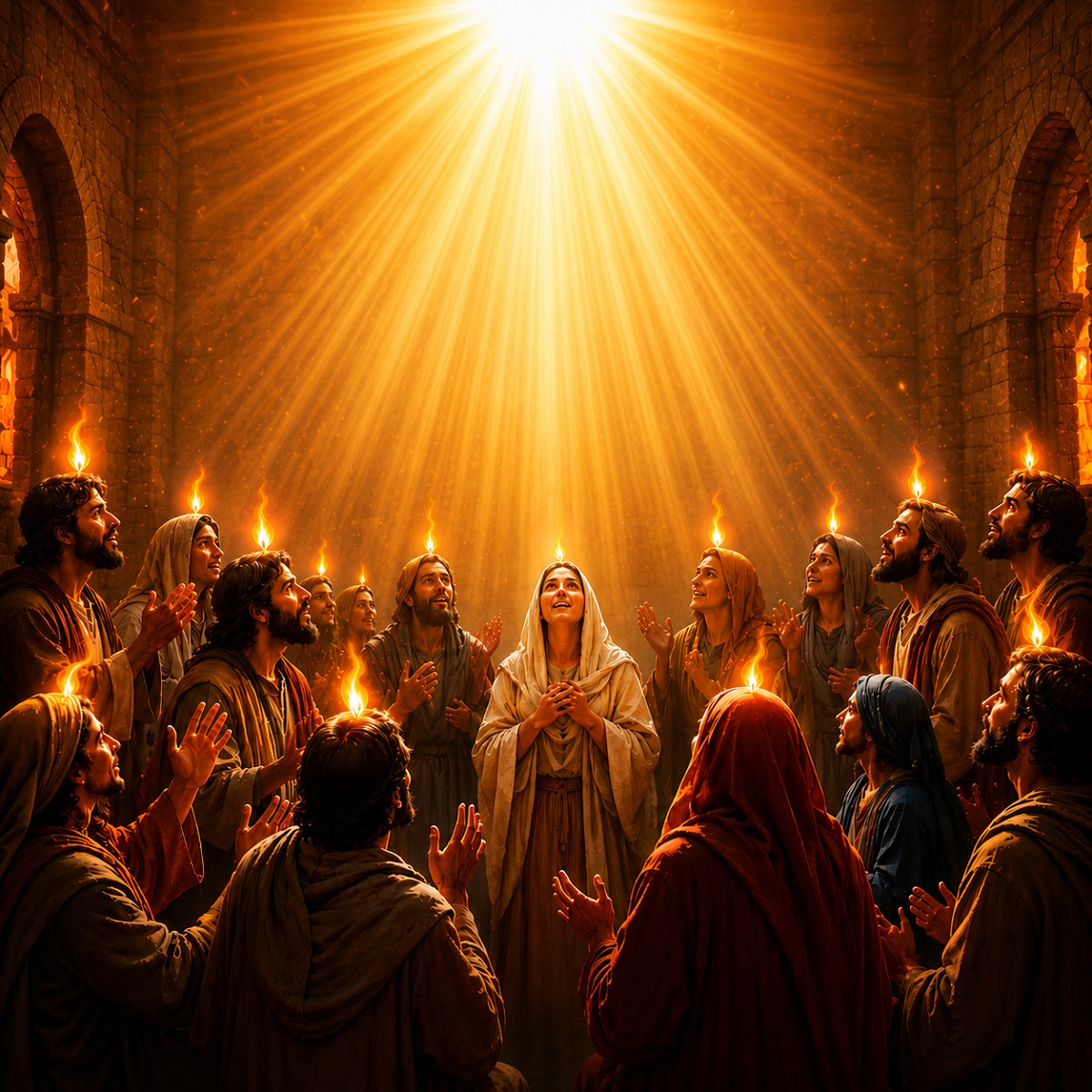
The Holy Spirit was poured out on the first Shavuot after Jesus’ death and resurrection.
During the evening, we will reflect on both events and what they mean for followers of Jesus (Yeshua) today.
About the Evening
Worship | Bible teaching | Shared Meal
Activity booklets will be available for children.
- Starts: 4:30 pm
- Meal: ~6:30 pm
- Finish: 8:30 pm
Location: Central Hamilton (address will be emailed after registration)
Cost: Free
About the Meal
We will share a meal together at about 6:30 pm.
Each household is invited to bring ready-to-eat food to contribute to the shared meal.
To help everyone participate comfortably, please bring food free from the animals prohibited in Leviticus 11. The most common ingredients to avoid are from pig (e.g. pork, ham, bacon, lard, sausages, non-bovine gelatin) and seafood.
If you are unsure what to bring, here are some ideas: Fresh fruit, roasted vegetables, chicken, lamb, beef, or a vegetarian salad.
Sharing the event
Do you know others who may also appreciate the opportunity to take part?
Shavuot / Pentecost in the Bible
Shavuot means “weeks” in Hebrew. It is called the Feast of Weeks because the LORD God (יהוה) instructed His people to count seven weeks, 50 days to be exact, from Firstfruits.
Shavuot is also called Pentecost, which comes from the Greek word pentekoste meaning “fiftieth”.
Calculating when Shavuot is celebrated
How Firstfruits and Shavuot dates are calculated:
- The Feast of Firstfruits is celebrated with a wave offering on the day after the first Sabbath after Passover (Leviticus 23:10-11).
- The Feast of Weeks is celebrated on the 50th day following Firstfruits: “You shall count seven full weeks from the day after the Sabbath, from the day that you brought the sheaf of the wave offering. You shall count fifty days to the day after the seventh Sabbath. Then you shall present a grain offering of new grain to the Lord…” (Leviticus 23:15-21, Deuteronomy 16:9 -12).
- There has been longstanding controversy over the phrase, “the day after the Sabbath”, used to determine the Feast of Firstfruits. The Sadducees and Pharisees were at variance over this point in the time of Jesus (Yeshua).
- Israel observes Firstfruits in agreement with the Pharisees, on the 16th of the first month (since the 15th is the first day of the Feast of Unleavened Bread and always a High Sabbath). This means that their Shavuot observance can fall on any day of the week.
- Saturday Christian Fellowship observes Shavuot on a Sunday, the day after the seventh weekly Sabbath, and in agreement with the Sadducees. For Shavuot to fall on a Sunday, the day after the weekly Sabbath, Firstfruits needs to fall on a Sunday also. This is why we celebrate Shavuot on Sunday 24 May 2026, starting at sunset on the 23rd.
Shavuot coincides with the wheat harvest
While Passover and the Feast of Unleavened Bread are celebrated around the time of the barley harvest in Israel, Shavuot is celebrated around the time of the wheat harvest. Shavuot included bringing two loaves of bread, made from new grain, to be waved before the LORD (Leviticus 23:16-17).
The edges of the fields and the gleanings after the harvest were to be left to the poor and sojourners (Leviticus 23:22). Since Boaz obeyed this instruction, Ruth gleaned in his field during the barley and wheat harvests (Ruth 2). Traditionally the Book of Ruth is read during Shavuot.
Shavuot and the Ten Commandments
Shavuot commemorates the LORD GOD (יהוה) giving the Ten Commandments to Israel and to the multitude of non-Israelites who joined them (Exodus 12:38).
The Bible does not tell us the exact day that the Ten Commandments were given, but we can infer that it happened close to the time of Shavuot.
Shavuot and the Holy Spirit
The Holy Spirit was poured out at Pentecost (Acts 2:1-5), resulting in about 3,000 people accepting Jesus (Yeshua) as the Messiah that day (Acts 2:41).
Why was there a crowd in Jerusalem at Pentecost?
Pentecost is also called Shavuot. All males were instructed to appear before the LORD at Passover, Shavuot, and Sukkot (The Feast of Booths / Tabernacles) (Exodus 23:14-17, Deuteronomy 16:16). Initially they appeared before the LORD at the Tabernacle, and later at the temple in Jerusalem.
However, everyone was instructed to celebrate these feasts (Deuteronomy 16:11). Women and children often went along to Jerusalem, as in the case of Mary and Joseph (Luke 2:41-43).
This is why there was such a large crowd in Jerusalem when the Holy Spirit was poured out at Pentecost (Acts 2:1-5).
Shavuot / Pentecost connects the Law and the Holy Spirit
The fruit of the Holy Spirit is in harmony with obedience to the law of God:
“But the fruit of the Spirit is love, joy, peace, patience, kindness, goodness, faithfulness, gentleness, self-control; against such things there is no law” (Galatians 5:22-23).
Love is a fruit of the Spirit. We love God and people by obeying God’s Commandments:
“By this we know that we love the children of God, when we love God and obey his commandments. For this is the love of God, that we keep his commandments. And his commandments are not burdensome.” (1 John 5:2-3)
Jesus (Yeshua) told his disciples that the Holy Spirit will “convict the world concerning sin and righteousness and judgement” (John 16:7-11).
Sin is defined as lawlessness, or the transgression of the law (1 John 3:4).
The law is primarily about love for God and people:
“Teacher, which is the great commandment in the Law?” And he said to him, “You shall love the Lord your God with all your heart and with all your soul and with all your mind. This is the great and first commandment. And a second is like it: You shall love your neighbor as yourself. On these two commandments depend all the Law and the Prophets.” (Matthew 22:36-40).
The Law and Salvation
We are saved by faith, and not by works of the law (Galatians 2:16).
We cannot rely on the law for salvation, because “all who rely on the works of the law are under a curse” (Galatians 3:10-14). Jesus (Yeshua) has redeemed us from this curse due to relying on the law, by becoming the curse for us. We are saved only by His atoning death and resurrection.
However, we are saved by a living faith, which is shown by our works:
“What good is it, my brothers, if someone says he has faith but does not have works? Can that faith save him?
If a brother or sister is poorly clothed and lacking in daily food, and one of you says to them, “Go in peace, be warmed and filled,” without giving them the things needed for the body, what good is that? So faith, if it does not have works, is dead.
But someone will say, “You have faith and I have works.” Show me your faith apart from your works, and I will show you my faith by my works. You believe that God is one; you do well. Even the demons believe—and shudder! Do you want to be shown, you foolish person, that faith apart from works is useless?
Was not Abraham our father justified by works when he offered up his son Isaac on the altar? You see that faith was active along with his works, and faith was completed by his works; and the Scripture was fulfilled that says, Abraham believed God, and it was counted to him as righteousness”—and he was called a friend of God.
You see that a person is justified by works and not by faith alone. And in the same way was not also Rahab the prostitute justified by works when she received the messengers and sent them out by another way? For as the body apart from the spirit is dead, so also faith apart from works is dead.” (James 2:14-26).